

This website uses cookies.
Learn more

Vladivostok: Sea and Russky Island
Vladivostok is one of Russia’s most striking coastal destinations, where the Pacific, rocky shores, and open sea horizons create a landscape unlike anywhere else in the country. For international travelers, it offers a scenic, atmospheric, and unforgettable way to experience the Russian Far East
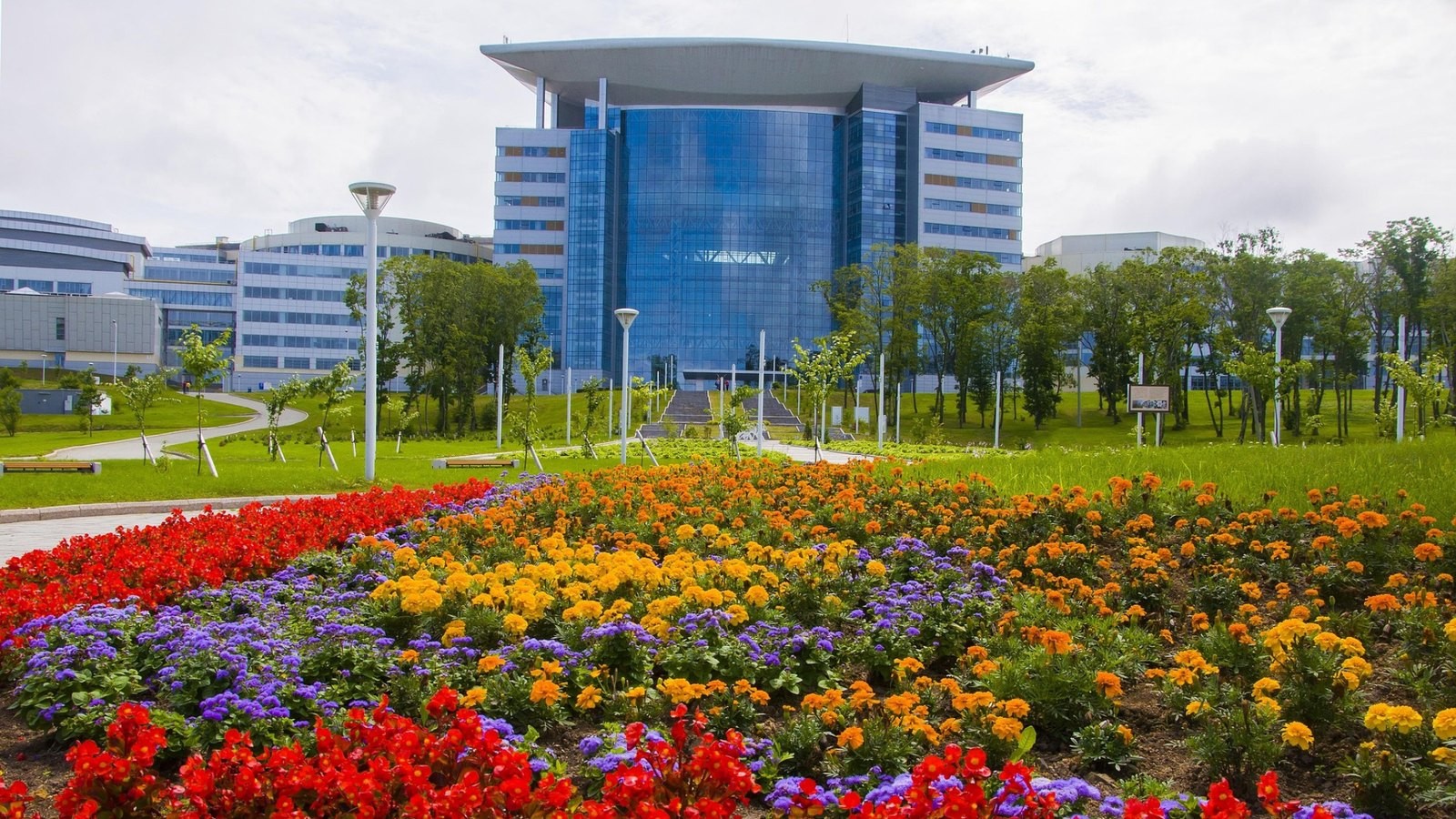
Vladivostok: Where Russia Turns Toward the Pacific
Vladivostok is one of the rare Russian cities that feels like an ending and a beginning at the same time. It stands at the edge of the country and opens directly toward the Pacific, yet it never feels remote in a passive way. Instead, it feels charged — by wind, by sea, by hills, by bridges, by ferries, by a daily rhythm that is visibly different fr om the rhythm of central Russia. For the Ready4Ru blog, Vladivostok is a powerful travel topic because it gives readers something they do not expect fr om Russia at first glance: a maritime city with an East Asian atmosphere, steep viewpoints, seafood culture, and a geography shaped by islands and bays rather than plains and boulevards.For international travelers, Vladivostok works especially well as a destination because it offers both visual drama and route-building value. You can have a compact city trip focused on panoramas, architecture, and food, or you can extend it into a more spacious coastal route that includes Russky Island, fortress sites, beaches, and long sea-facing walks. The city’s official tourism materials position Eagle’s Nest as the classic place to start and present Tokarevsky Lighthouse, Millionka, the funicular, and the bridges as defining experiences. That combination makes Vladivostok feel memorable even before the practical planning begins.
What to see in Vladivostok
If this is your first trip, it is best to build the route around several anchor points that reveal the city’s character fr om different angles.
The first is Eagle’s Nest Hill. Official city tourism describes it as the most popular and well-kept observation point — and that description feels accurate. The view is not just beautiful; it explains the city. Fr om here, Vladivostok suddenly makes sense: the steep relief, the bays, the dense neighborhoods, the sweep of the bridges, the sense of land constantly meeting water. Even travelers who normally skip viewpoints should make time for this one, because it is the fastest way to understand why Vladivostok feels so unlike most other cities in Russia.
The second key direction is the bridge-and-bay panorama. Vladivostok’s modern image is inseparable from its big engineering landmarks, especially the route toward Russky Island. Official tourism materials describe the bridge to Russky Island as one of the city’s defining symbols and note its 2012 opening. In editorial terms, this matters because the bridges are not only infrastructure; they shape the emotional image of Vladivostok. They turn movement itself into part of the destination.
The third anchor point is Tokarevsky Lighthouse. The local tourism portal presents it as one of Vladivostok’s main attractions, and that makes sense immediately when you walk there. The place feels cinematic even in ordinary weather: the long spit, the water on both sides, the lighthouse ahead, the sense that the city is gradually narrowing into open sea. It is one of those locations that gives a trip texture rather than only another photo stop.
A fourth direction is Russky Island. This is wh ere Vladivostok opens out beyond city viewpoints into something more coastal and elemental. Russky Island adds cliffs, beaches, wider horizons, and the feeling of being close to the Pacific landscape rather than simply looking at it fr om town. It is ideal for travelers who want their city break to gain space and air.
And then there is Millionka — the historic quarter that official tourism still describes through its layered, slightly mysterious past. Today it works as one of the most atmospheric places in the center, wh ere old courtyards, brick passages, cafes, and urban legends create a side of Vladivostok that is less panoramic and more intimate. It is the right counterweight to all the open-sky viewpoints.
Logical routes for 3, 5, and 7 days
- A three-day trip works best if you keep it compact and strong. Day one should focus on the historic center, Eagle’s Nest, the funicular, and the main waterfront rhythm of the city. Day two can be built around Tokarevsky Lighthouse, Millionka, and a long seafood lunch. Day three is perfect for Russky Island or a half-day coastal extension.
- A five-day route gives Vladivostok more room to breathe. You can keep the city center unhurried, add a fortress museum or military-history site, spend longer on Russky Island, and leave time for slower neighborhood walks, coffee stops, and evening viewpoints.
- A seven-day itinerary turns Vladivostok fr om a city visit into a regional mood. At that length, the city begins to feel less like a checklist and more like a lived coastal route: bridges in changing weather, mornings near the water, seafood markets, island landscapes, and short excursions that add depth instead of speed.
Hidden gems and local experience
The strongest trips to Vladivostok are not built only around the headline attractions. They also include smaller experiences that reveal the city’s local logic.
One of the best low-key experiences is simply moving between heights and water. Ride the funicular, walk down instead of back, and let the city rearrange itself from hilltop panorama to street-level detail. Visit a local seafood shop or market rather than ordering the same dishes in a generic restaurant district. If you have time, follow the older streets and passages near Millionka to see how Vladivostok carries traces of trade, migration, and maritime life in its built texture.
Local recommendations often circle back to the same simple idea: Vladivostok is best experienced slowly. Don’t try to force it into the pattern of a classical European city break. It rewards pauses, weather, viewpoints, and appetite. Even the fog — something many travelers would consider bad luck — can become part of the city’s atmosphere rather than a problem to solve.
Food, culture, and Far Eastern atmosphere
Vladivostok is one of the most interesting food cities in Russia because its culinary identity is shaped by the sea and by proximity to East Asia. Regional tourism materials describe Far Eastern cuisine as a blend of marine products, taiga ingredients, and Asian influence, and that is exactly the right editorial frame for the city.
For travelers, the key experience is seafood. Crab, scallops, shrimp, mussels, and seasonal fish are not just luxury add-ons here; they are part of the city’s everyday food language. A practical article should recommend trying local crab, scallops, ukha (fish soup), and dishes that combine Russian and Asian techniques. If you visit during the colder season, the Smelt Festival is one of the distinctive seasonal events promoted by the city’s tourism resources, and it gives the gastronomic side of Vladivostok an especially local rhythm.
Culturally, Vladivostok also feels different from western Russian cities. Its maritime identity softens the formality travelers sometimes expect. The city is direct, windy, visual, and outward-looking. Useful Russian phrases remain simple — “Здравствуйте” (Hello), “Спасибо” (Thank you), “Сколько стоит?” (How much is it?), “Где остановка?” (Wh ere is the stop?) — but in Vladivostok they are often paired with a practical, no-nonsense urban style that suits the port atmosphere.
Planning your trip: logistics, payments, seasonality, and safety
The practical side of Vladivostok matters more than many travelers expect, because it is a long-haul destination inside Russia and because the city’s geography shapes daily movement.
For most international travelers coming via Moscow or St. Petersburg, flying is the realistic and time-efficient choice. Rail is possible and legendary in theory because of the Trans-Siberian image, but in practical trip planning, flights make far more sense unless the railway journey itself is the point. Inside the city, taxis and ride-hailing apps are useful because of the steep terrain, while walking works best when you are deliberate about neighborhoods rather than trying to cross everything on foot. A Russian mobile number is helpful for taxi apps, logistics, and confirmations, especially in a city wh ere plans may shift with weather or distance.
The financial side is even more important. Vladivostok is modern enough for card payments in hotels, many restaurants, chain cafes, and transport-linked services, but travelers should not assume that foreign bank cards will work in Russia. They often do not. In a city wh ere bookings, taxis, quick food stops, and route changes matter, this becomes more than a minor inconvenience. It shapes the whole quality of the trip.
That is why the Ready4Ru integration works naturally here. To avoid relying on cash exchange and to pay more smoothly across Russia, many travelers arrange a Russian MIR card in advance through services such as Ready4Ru. This is especially practical for booking hotels on Russian platforms, buying train or flight tickets, and handling daily payments without friction. For the same reason, it helps to arrange travel insurance before departure. Vladivostok is not difficult, but it is much better when the essentials are already solved.
How much cash should you carry? In Vladivostok, a balanced recommendation is to keep a modest cash reserve for markets, small kiosks, and backup situations, while expecting most larger payments to be easier with a Russian card. That balance is more practical than trying to operate entirely on cash in a city wh ere routes, weather, and timing can shift plans quickly.
Seasonality also matters. Late spring to early autumn is the easiest period for a first trip because viewpoints, island outings, and long coastal walks are simpler to enjoy. Summer is the clearest recommendation for most international readers. Early autumn is also strong: the light is beautiful, the air is clearer, and the city often feels calmer. Winter has atmosphere, especially with seafood culture and sea fog, but it changes the structure of the trip and requires more careful planning.
In terms of safety, Vladivostok is generally straightforward for travelers who use normal city awareness. Watch the weather, wear shoes suitable for slopes, and take coastal conditions seriously near exposed areas such as lighthouses, spits, and island paths. The city’s challenge is not danger in a dramatic sense; it is underestimating distance, wind, or terrain.
Who this trip is for
Vladivostok works best for travelers who want a city with character rather than only a checklist of monuments. It suits readers who like sea air, viewpoints, food, layered urban history, and destinations that feel slightly outside the expected map. If someone wants a classical first trip to Russia built around palaces, museums, and dense imperial symmetry, St. Petersburg is simpler. But if the goal is to discover a Russian city that feels genuinely different — more maritime, more Pacific, more open to weather and horizon — Vladivostok is one of the strongest choices in the country.
Vladivostok is not just a far-eastern endpoint. It is one of Russia’s most distinctive travel cities: steep, windy, sea-shaped, bridge-defined, and full of contrasts that work beautifully in editorial storytelling. Eagle’s Nest, Tokarevsky Lighthouse, Russky Island, Millionka, seafood culture, and the Pacific atmosphere all combine into one clear impression: this is a place that turns distance into identity. For the Ready4Ru blog, it is exactly the kind of destination that balances aspiration with practical planning. Travelers can be inspired by the views — and then actually make the trip easier by preparing the essentials in advance through a Russian payment solution and travel insurance.
Other articles
Chechnya
The Chechen Republic is one of the most visually contrasting regions in the North Caucasus: a modern capital, major mosques, mountain roads, high lakes, and fast shifts from city scale to highland silence. For travelers, it offers a route shaped by contrast and surprise
Stavropol Krai
Stavropol Krai works differently fr om the higher mountain republics: it is about rhythm, resort culture, long promenades, mineral springs, and the soft edge wh ere spa towns meet the Caucasus. For travelers, it offers one of southern Russia’s most polished and accessible regional escapes
North Ossetia–Alania
North Ossetia–Alania is one of the most complete travel regions in the North Caucasus, combining a charismatic city, famous gorges, strong mountain roads, and places that carry real historical weight. For travelers, it is a route with both scenery and story
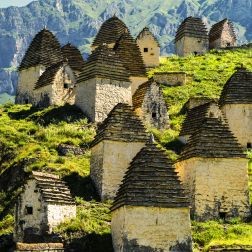
Ingushetia
Ingushetia is one of the North Caucasus’ quietest and most distinctive regions, known for mountain tower complexes, narrow valleys, and a remarkable sense of stillness. For travelers, it offers a route built less on spectacle alone and more on atmosphere, history, and mountain memory

Karachay-Cherkess Republic
Karachay-Cherkessia is one of the most rewarding mountain regions for travelers who want both scenery and flexibility. With Dombay, Arkhyz, and Teberda in one region, it offers a route that can feel adventurous, restorative, and surprisingly varied within just a few days
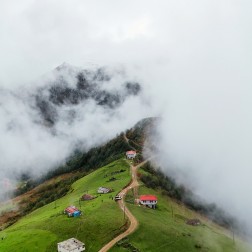
Kabardino-Balkaria
Kabardino-Balkaria is one of the Caucasus regions that instantly delivers scale: snowy summits, narrow gorges, waterfalls, and roads that feel dramatic from the first hour. For travelers, it works as both a classic Elbrus destination and a broader mountain route full of depth and atmosphere

Yamal
Yamal is Russia’s Arctic Circle story: Salekhard, Nenets reindeer culture, mammoth history, tundra and winter festivals

Komi
Komi is for travelers who want deep northern nature: Syktyvkar, Finno-Ugric culture, virgin forests and Manpupuner